


The closing event of the BIO+IA Early Adopters Programme brought together teams from Mexico, Chile, Ecuador and Colombia-Venezuela, who demonstrated how artificial intelligence can transform research processes that, in some cases, had been under development for years. Four teams tackling scientific challenges, all with the same aim: to accelerate research and the generation of knowledge, supported and assisted by AI.
On 23 July, the Early Adopters BIO+IA Programme’s Demo Day was successfully held. This initiative, promoted by RedCLARA as part of the BELLA II project, provided research teams from Latin America and the Caribbean with access to the Bioinformatics and Artificial Intelligence Testbed (BIO+IA) for eight weeks, alongside specialised training and technical support to accelerate their scientific processes through the use of artificial intelligence.
The programme was designed to support research, innovation and technological development projects focused on areas such as gene regulation, complex diseases, precision medicine, antimicrobial resistance and biotechnology, through the combined use of bioinformatics and artificial intelligence. Following an open regional call for proposals in March 2026, five initiatives from six countries in the region were selected to work with BELLA II’s BIO+IA Testbed.
During Demo Day, four of the five selected teams presented their findings. Despite their differing research topics, they all reached a common conclusion: the incorporation of artificial intelligence tools significantly accelerated tasks involving the search for, integration, interpretation and analysis of scientific evidence, freeing up time for the generation and validation of new hypotheses.
The projects presented addressed scientific challenges with high potential for impact on the region’s health and sustainable development.
From Mexico, a team affiliated with the National Research and Education Network (NREN ), CUDI, presented progress in the development of a low-cost early-detection system for breast cancer, based on the analysis of extracellular vesicles released by tumour cells into the bloodstream. Its aim is to expand diagnostic options for women who currently face barriers to accessing specialised technologies.
Next, Chilean researchers linked to the local NREN, REUNA, presented the results of a study aimed at understanding the mechanisms of drug resistance in triple-negative breast cancer. The project explored the role played by certain mitochondrial candidates in the loss of response to chemotherapy treatments, opening up new lines of research to understand this aggressive form of cancer.
From Ecuador, with the support of its NREN, CEDIA, the MerIA project presented a methodology that integrates bioinformatics and artificial intelligence to identify genetic sequences associated with bacterial resistance to mercury. The results could, in the future, contribute to the development of bioremediation strategies for contaminated mining areas in Latin America.
Finally, a Colombian-Venezuelan team, led by the Autonomous University of Bucaramanga with support from the Colombian NREN, RENATA, and in collaboration with the Venezuelan Institute for Scientific Research (IVIC), presented preliminary results suggesting the potential to repurpose a widely used cough medicine as a therapeutic alternative for certain liver diseases.
More than just individual results
One of the programme’s main achievements was to demonstrate that artificial intelligence not only enables specific results to be obtained in individual projects, but also transforms the way in which scientific research is conducted.
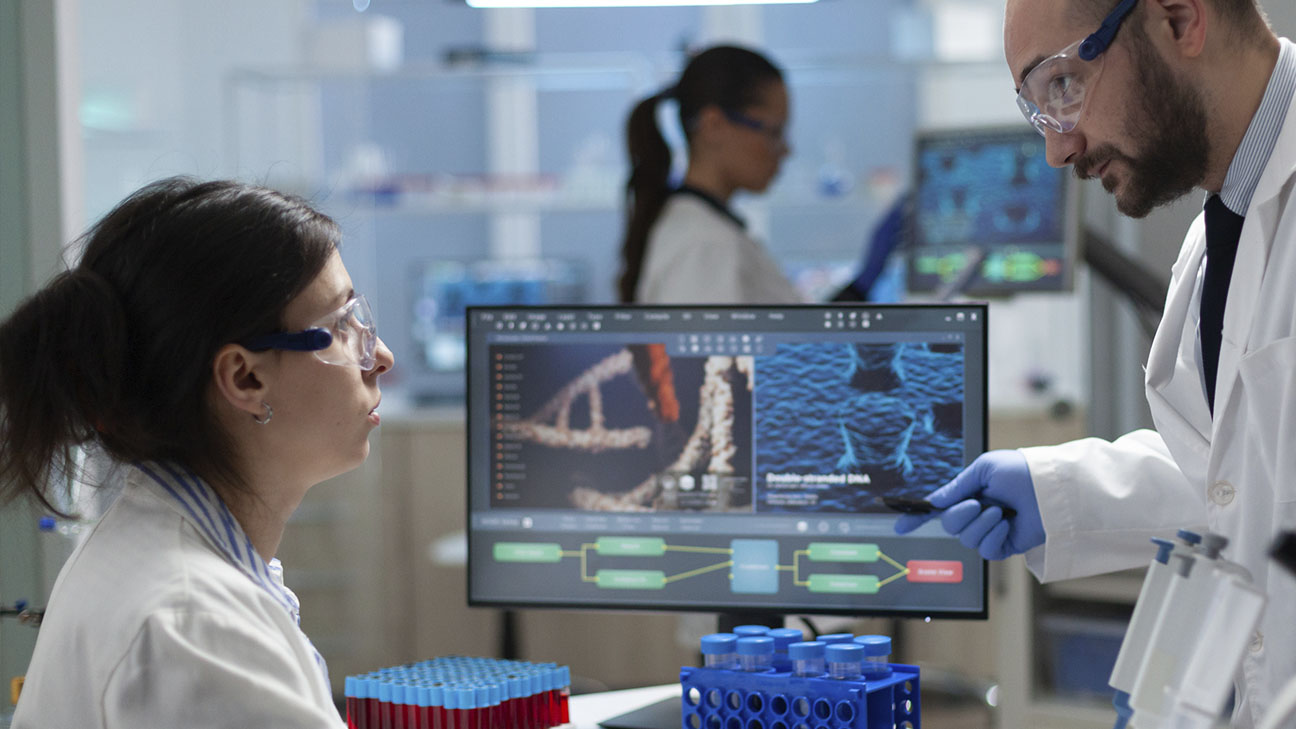
During the eight weeks of work, the teams used the BIO+IA Testbed, a regional infrastructure enabled by BELLA II and operated on RedCLARA, designed for the capture, processing and analysis of large volumes of scientific data using generative artificial intelligence, logical artificial intelligence and structural bioinformatics.
As a next step, researchers Jacinto Dávila and José López, who are responsible for the methodological and technological development of the BIO+IA Testbed, will coordinate the drafting of an international scientific article that will jointly analyse the results obtained by the participating teams. The aim will be to document how the incorporation of artificial intelligence is transforming biological research protocols and helping to accelerate scientific discovery in the region.
Watch the Demo Day video at: https://youtu.be/6F97O2IZrZI?si=cNcB2P0MQf1Mbr_1