


A Chilean collaboration driven by BELLA II: Artificial intelligence to understand resistance to triple-negative breast cancer

With the support of RedCLARA, REUNA and the BELLA II BIO+IA testbed, a Chilean team of researchers from the Universidad del Desarrollo (UDD) and the University of Chile (UCh) used artificial intelligence to identify new biological pathways associated with resistance to treatments for triple-negative breast cancer.
Exploring new therapies for fibrosis through artificial intelligence, bioinformatics and regional collaboration

What if the key to treating liver and lung diseases were hidden in a medicine that has been present in millions of households for decades? With the support of the Early Adopters BIO+IA programme, a team of researchers from Colombia and Venezuela used artificial intelligence and molecular network analysis to investigate a possibility that could open up new horizons for the medicine of the future. The result? A demonstration of the value of regional collaboration and of how artificial intelligence...
Early detection of breast cancer: Artificial intelligence helping the most vulnerable women in Mexico

Breast cancer is one of the leading causes of death among women worldwide. In fact, according to the Pan American Health Organisation (PAHO), more than 220,000 new cases are diagnosed each year in Latin America and the Caribbean alone, and around 60,000 women die from the disease, half of them before reaching the age of 65. Against this backdrop, the question posed by a Mexican multidisciplinary team is particularly pertinent: Can we identify ‘biological markers’ of breast cancer in a blood samp...
MerIA: Artificial Intelligence and Bioinformatics to Accelerate the Identification of Mercury-Resistance Genes in Latin America
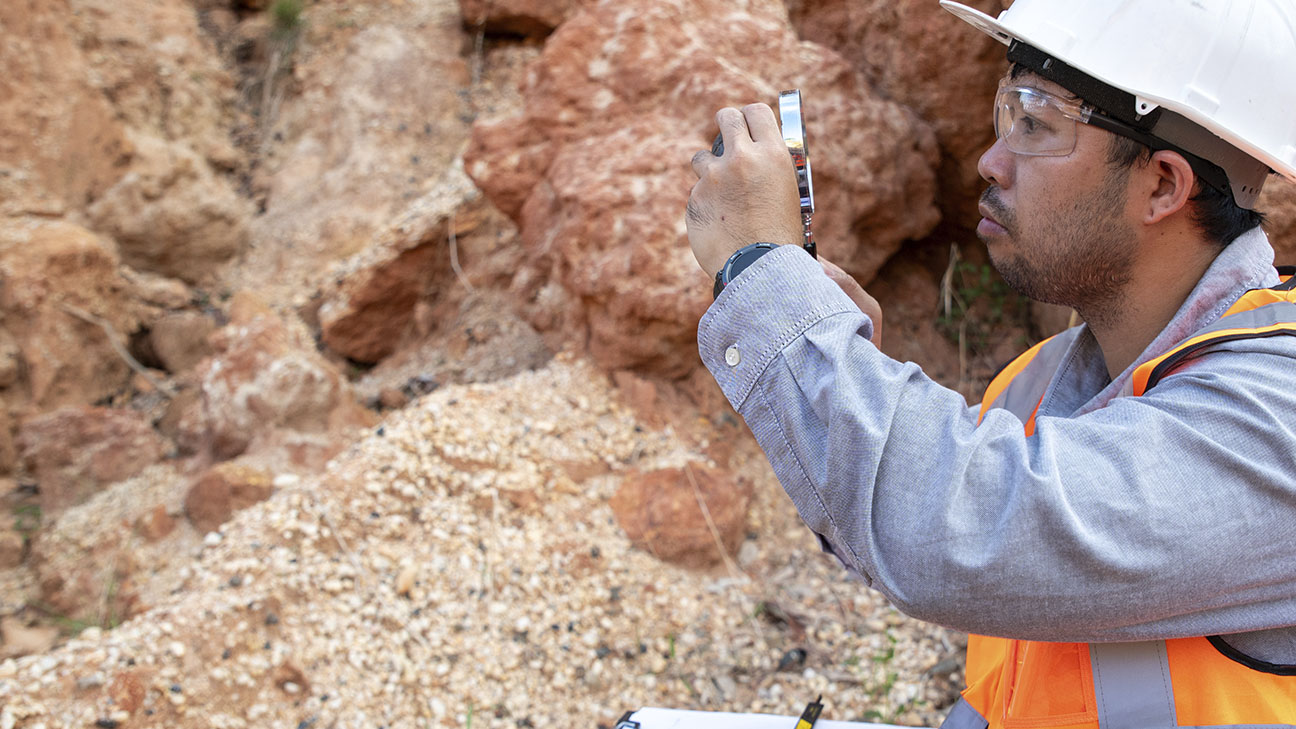
Mercury pollution is one of the most persistent environmental and health problems in Latin America, with significant impacts on ecosystems and communities exposed to this highly toxic metal, particularly those involved in artisanal mining. Kidney problems, neurological disorders and foetal malformations are among its most severe manifestations. Faced with this challenge, the Ecuadorian MerIA (Mercury Identification through Artificial Intelligence) project, which benefited from the capabilities o...
eduLACSeg: The defense force of Latin America’s largest academic cybersecurity ecosystem
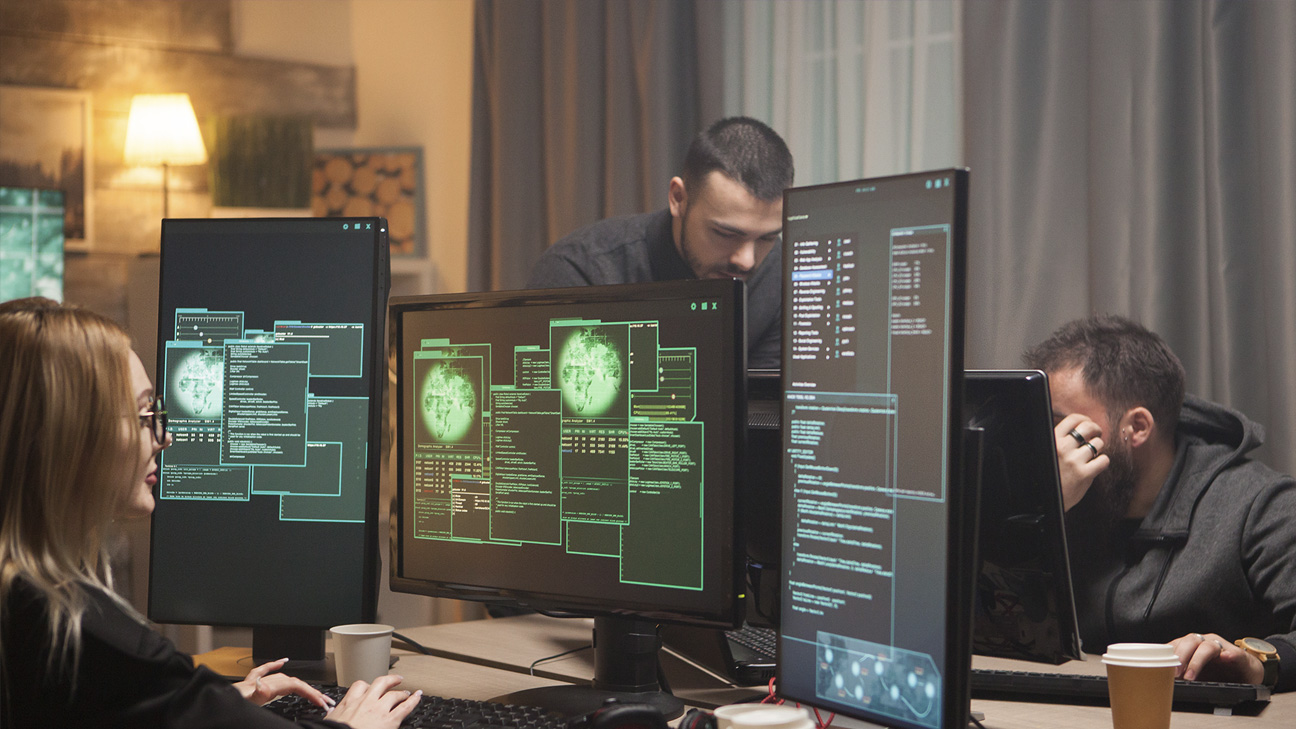
Now approaching its fifth anniversary and built on the foundations of a collaboration that has lasted more than 20 years – which, amongst other things, led to the creation of RedCLARA – the Regional Cybersecurity Group of the National Research and Education Networks (NREN) of Latin America and the Caribbean, eduLACSeg, is already proving its immense value. Find out more and discover how your institution can benefit from it.
Smart Agro RAF LATAM: Blockchain for traceability in family farming in Latin America

Family farming forms the basis of food security in Latin America, but faces persistent challenges in terms of transparency, traceability and access to higher-value markets. Smart Agro RAF LATAM is a regional collaborative initiative which, supported by the BELLA II Early Adopters Blockchain programme – run between September and December 2025 – demonstrates how the advanced digital infrastructure of RedCLARA and the national research and education networks (NRENs) that comprise it enables innovat...
Honey in the Chain: Blockchain for Beekeeping
 Honey in the Chain: Blockchain for BeekeepingEach jar of honey holds a story we rarely know: that of the families who care for the hives and of the bees that pollinate crops and support ecosystems. Today, thanks to technology, that story can be tracked from the hive to the consumer through secure and accessible records. These records allow production and origin to be verified and are ready to connect to international data networks when needed. This benefit is one of the impacts amplified by the ...
Purpose-Driven Supercomputing: Innovation with a Guatemalan Signature
 When technology impacts real life, it ceases to be just innovation and becomes transformation. The high-performance computing (HPC) testbed of the BELLA II project is a key tool to drive that change in Latin America and the Caribbean by turning scientific knowledge into solutions that protect human health and the environment.
BELLA IMPACT: BELLA connectivity is bringing benefits to High Energy Physics research

In September 2021 we witnessed the official launch of BELLA, the new transcontinental link that interconnects the research network backbones in Europe (GÉANT) and Latin America (RedCLARA). The inauguration event took place online at TICAL, RedCLARA’s annual conference.
BELLA impact – Large data exchanges and high-capacity connectivity will enable the Cherenkov Telescope Array (CTA) to open a new window to the Universe

Connectivity can be a major hurdle for global collaborative research organisations. Such initiatives are progressively taking centre stage as humanity seeks to address some of the most pressing challenges of our time and to answer questions about the universe.
BELLA IMPACT: Latin America can tackle climate emergencies with high-speed and reliable access to vital Copernicus Earth Observation data
 Scientists, citizens and organisations want to help fight climate change for a brighter future, researching, developing and implementing innovative solutions that also create employment and drive economic growth.
Copernicus: technology allied to Earth observation
 Decreasing of air pollution during the pandemic of coronavirus, monitoring of climate changes, and forest fire alerts. These are some of the interesting activities and researches for Brazil and for the world that make usage of the data generated by the Copernicus project. The program of the European Commission counts with the international cooperation of various countries, including Brazil, Colombia, and Chile in Latin America.
Chilean scientists watch explosion of 61 supernovas in real-time
 Recently, a group of scientists from the Center for Mathematical Modeling (CMM) of the Universidad de Chile were able see the explosion of 61 supernovas in real time, just hours after they appeared in space.
LAGO Observatory: The Latin American Giant using Advanced Networks
 The data generated between the different LAGO centers are transferred through the Advanced Networks. Depending on the number of detectors, 5 to 10 GB are processed monthly for each site, as indicated by Dr. Torres, principal investigator of the project.
Chronicle of a global collaboration: the fusion of two neutron stars, a hug of 130 million years
 August 17, 2017: Scientists from all over the world who study the Universe witness and analyze online and live a historical event that will mark a before and after in the way we understand the study and the development of Astronomy. The news is spread all over the globe on October 17. In our homes and offices, going on the public transport or walking around, we watch on TV, mobile devices and computers the re-creation of a two neutron stars fusion that occurred 130 million years ago in NGC4993, ...