

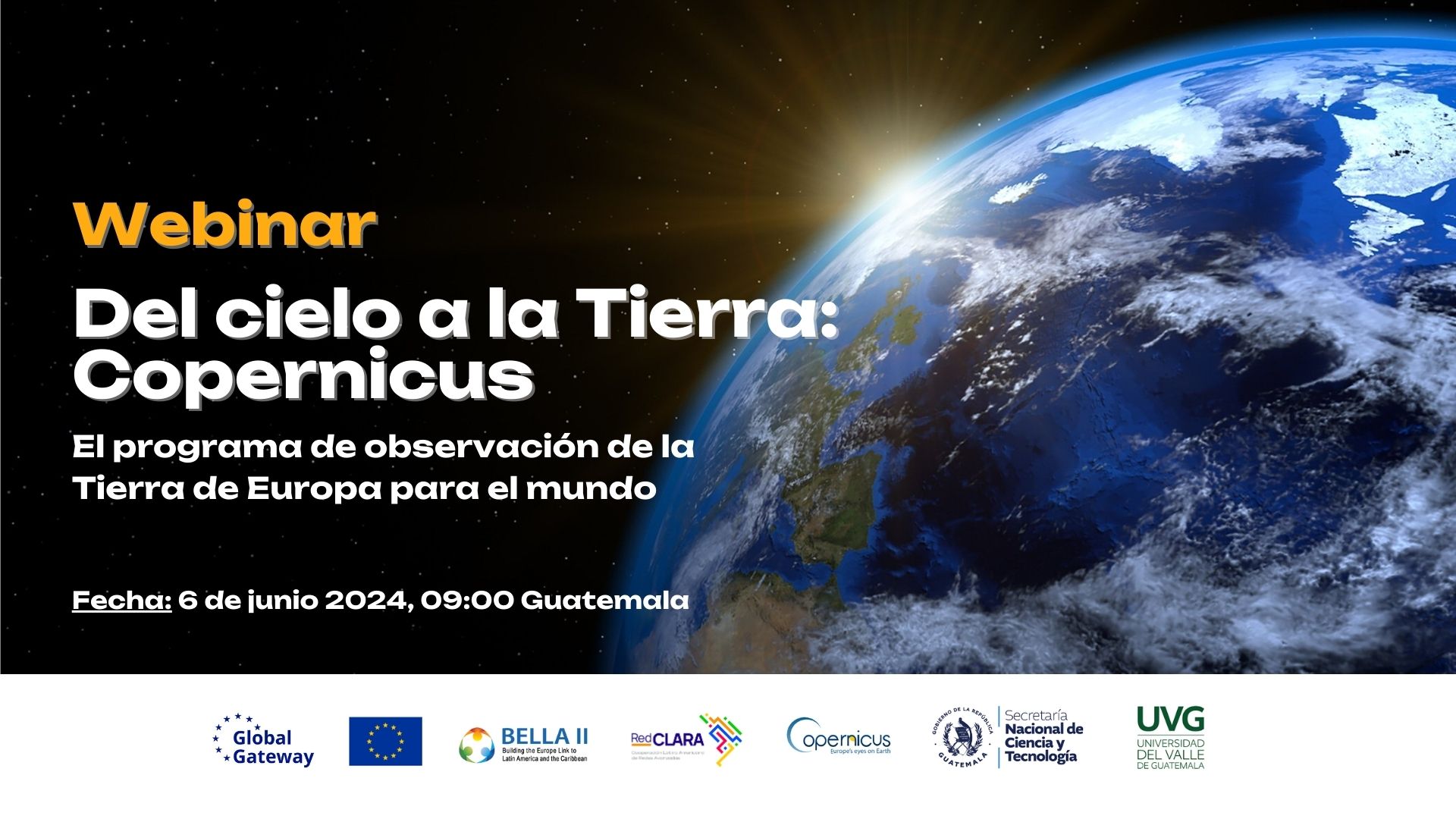
RedCLARA, the BELLA II project, and the European Union (EU), with support from the National Secretariat of Science and Technology (SENACYT) and the University of the Valley, are organizing a webinar on June 6th to kick off the Copernicus Academy's rollout in Guatemala.
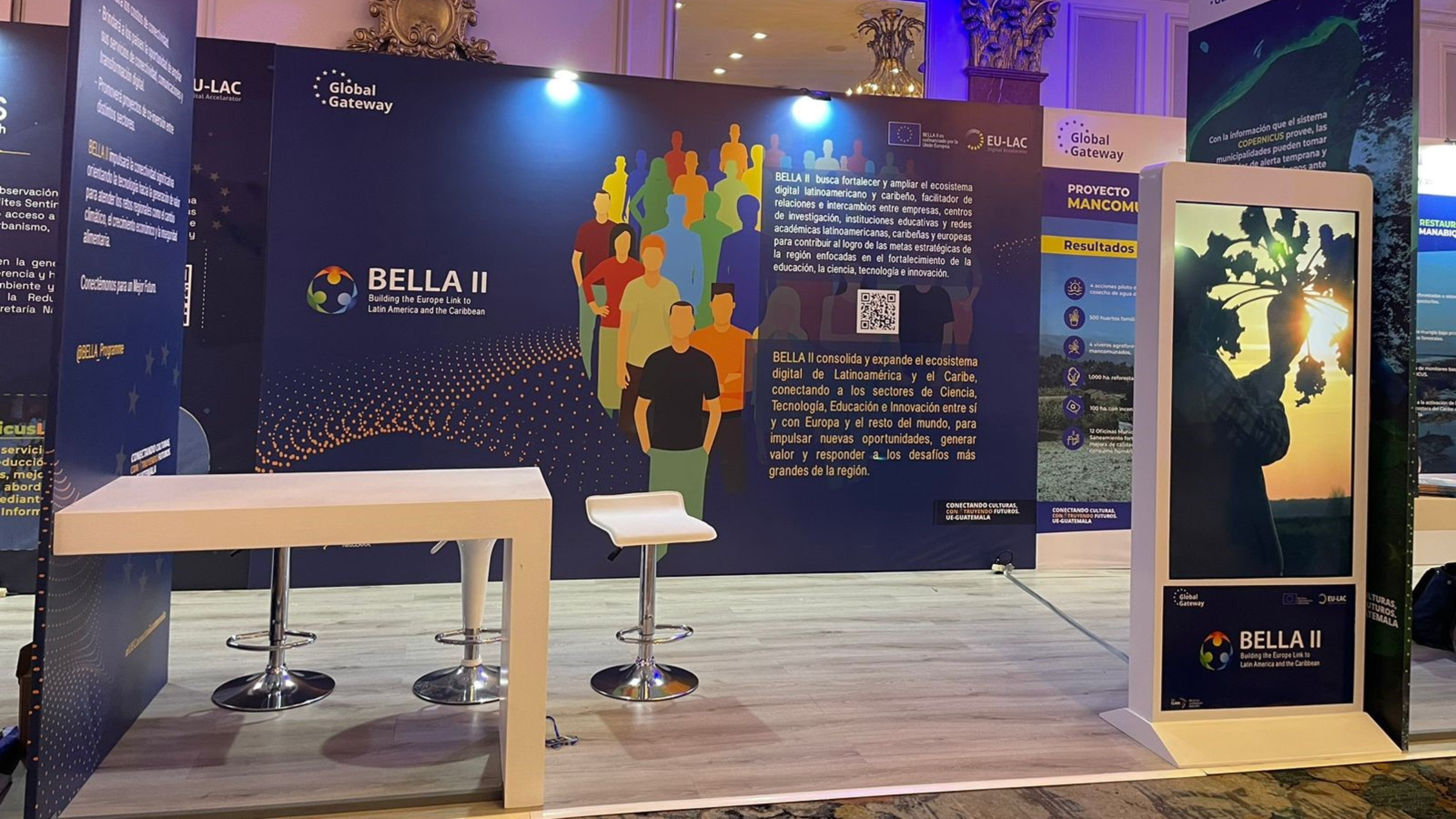
The celebration of Europe Day in Guatemala was the setting for the presentation of the opportunities that the BELLA II project will bring to the country in terms of connectivity and cooperation in science and technology, as well as the synergies it will bring with the Copernicus Earth Observation Programme, including the Copernicus Academy.
The Southern Macrozone of Chile is one third of the country’s surface and holds significant scientific potential with both national and global impact. It plays a strategic role in addressing the Climate Crisis and possesses global comparative advantages (Ice Fields, Antarctica, subantarctic and pristine territory). However, until recently, it was one of the few geographical areas on the planet disconnected from Global Research and Education Networks.
ACKNOWLEDGEMENTS
![]() |
BELLA II receives funding from the European Union through the Neighbourhood, Development and International Cooperation Instrument (NDICI), under agreement number 438-964 with DG-INTPA, signed in December 2022. The implementation period of BELLA II is 48 months. |
Contact
For more information about BELLA II please contact: